If you shave your head and you're tired of the daily routine, it's a fair question to ask: can you use hair removal cream on your head the way you would on your legs or chest? Technically you can apply it, but "can" and "should" are two very different things. Depilatory creams were designed for the body, not the scalp, and the scalp is one of the more sensitive, hair-dense, and awkward-to-reach areas you can put a strong chemical on. Here's exactly what happens, what the real risks are, and what works better.
How hair removal cream actually works
Creams like Nair and Veet don't cut hair — they dissolve it. The active ingredients are usually calcium thioglycolate and a strong alkaline agent (potassium or calcium hydroxide) that raises the product's pH high enough to break down keratin, the protein your hair is built from. After a few minutes the hair weakens at the surface and wipes away with a damp cloth. Because the chemistry works on keratin, and your skin is also partly keratin, the same reaction that dissolves hair will start to irritate skin the longer it sits. That's why every label gives a strict maximum contact time, often just three to ten minutes.
The risks of using hair removal cream on your head
The scalp changes the math in a few important ways. First, the hair on your head is far denser than body hair, so an even, complete result is hard to get — you'll often find patchy spots the cream didn't fully clear. Second, scalp skin sits right over bone with very little cushioning, and it's close to your eyes, ears, and hairline, where runoff and fumes can cause real problems. Chemical burns, stinging, redness, and contact dermatitis are all common complaints when people use these products off-label on the head.
A few specific things to keep in mind:
- It's not formulated for the scalp. Most depilatories explicitly warn against use on the head or face (beyond a dedicated facial formula). Using them there is off-label, and you absorb the risk.
- Fumes are harsh. Thioglycolate has a strong, sulfuric smell. On your head it sits inches from your nose and eyes for the full contact time.
- Runoff is unpredictable. Warm scalp skin, sweat, and gravity can carry the cream toward your forehead, ears, and neck, spreading irritation beyond where you wanted it.
- The result isn't truly smooth. Dissolved hair leaves a blunt, rounded stub at the skin line. It can feel softer than a shave at first, but it is not a bald, polished finish.
If you still want to try hair removal cream on your head
If you've weighed all that and still want to experiment, do not skip the patch test. Apply a small amount to a coin-sized area behind your ear or on your neck, leave it for the minimum time on the label, rinse completely, and then wait a full 24 hours. If you see any redness, itching, or burning, that's your answer — stop there. If the patch is clear, work in small sections, never exceed the stated contact time, keep the cream well away from your eyes and ears, and rinse with cool water (not hot, which opens pores and increases stinging). Follow up with a fragrance-free moisturizer to calm the skin.

The closer, safer way to keep your head smooth
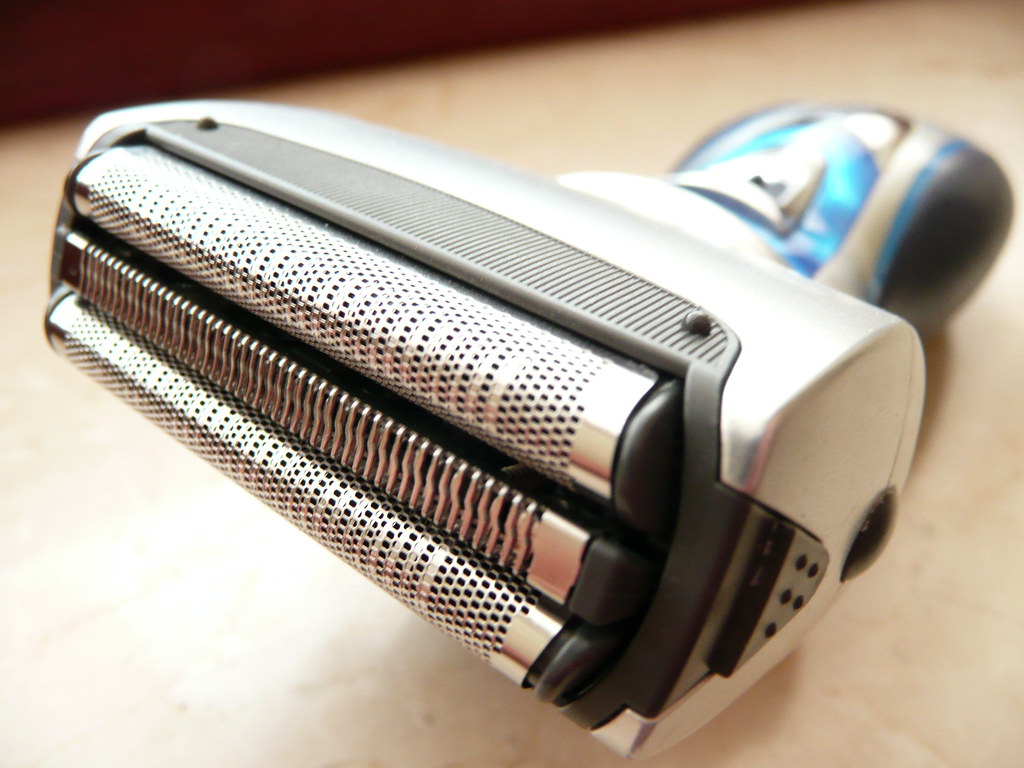
For nearly everyone, an electric head shaver is the better tool. It gives you a genuinely smooth, polished finish in a couple of minutes, with no caustic chemistry, no contact-time stopwatch, and no burn risk. A quality multi-blade head shaver follows the contours of your skull, handles the crown and the back of your head, and can be used in or out of the shower. You get a consistent result every day instead of a patchy, smelly, hit-or-miss one. If you're shopping, our guide to the best head shaver breaks down what actually matters — blade design, how close it shaves, and how gentle it is on sensitive scalps.
Bottom line: you can put hair removal cream on your head, but the scalp's sensitivity, density, and proximity to your eyes make it a poor trade-off. A good shaver is faster, safer, and gives a better-looking result — which is why it's what most bald guys settle on for the long run.
Ready for the smoothest shave?
Our #1-ranked head shaver — the Exoshave 7D — is 50% off today. See why it beat every rival in our 6-week test.
See the #1 pick →