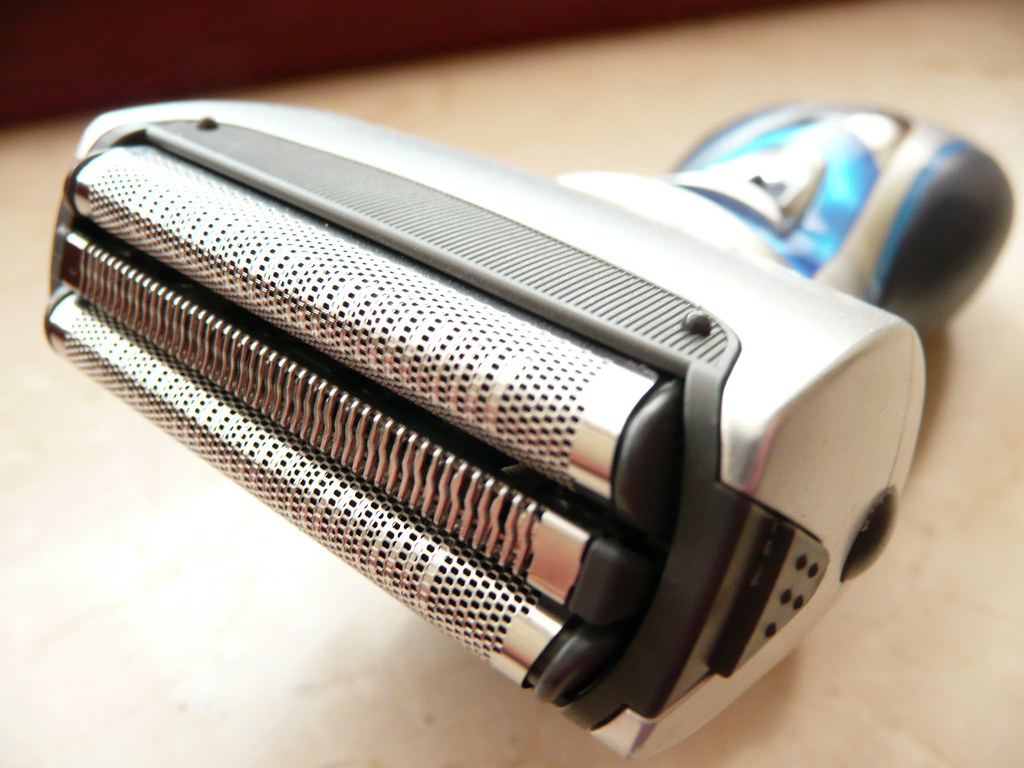
You flip on your shaver, and instead of the smooth, even hum you're used to, it's rattling, whining, or grinding against your scalp. A head shaver making noise is unsettling — it sounds expensive — but in most cases it's a quick fix, not a dead machine. The sound is a clue: the type of noise usually points straight to the cause. Here's how to read what your shaver is telling you, the fixes that solve the common cases in a few minutes, and the rare signs that mean the motor itself is on the way out.
What a healthy head shaver sounds like
A well-maintained electric head shaver makes a consistent, mid-pitched hum — steady enough that you stop noticing it after a few seconds. The pitch holds even when you press the head lightly against your scalp. Some vibration in the handle is normal, and foil shavers tend to run a touch higher-pitched than rotary ones. The moment to pay attention is when that steady hum changes: it climbs into a whine, drops into a grind, adds a rattle or a click, or surges up and down in pitch as you shave. A change in sound almost always means a change in how freely the cutters are moving — and that's something you can usually fix yourself.
Why your head shaver is making noise
Match the sound to the likely culprit, roughly in the order you'll run into them:
- Grinding or crunching — packed hair, skin, and dried cream jammed under the foil or blades. By far the most common cause, and the easiest to fix.
- Dry, high-pitched whine — unlubricated cutters, metal scraping metal with no film of oil to quiet and cool them.
- Rattling or buzzing — a head or foil frame that isn't clicked fully into place, so a loose part vibrates against the body.
- Clicking or knocking — a cracked foil, a bent cutter, or a chip of debris striking the blades on every rotation.
- Surging, laboring, slowing down — a low battery or a motor straining against dull, worn blades.
- Deep grinding with heavy vibration — the rare one: a worn motor bearing. This is the sound that usually isn't worth repairing.
Fix it: clean, reseat, and oil
Start with the head, because a clog causes most noise complaints. Switch the shaver off, pop the cutting head open, and brush every trace of hair out of the foils, blades, and the cavity underneath — a stiff brush gets into the corners a rinse misses. If your model is washable, rinse the head under warm running water until it runs clear, tap it dry, and let it air out fully. Even a partly clogged head will grind again within a minute of switching back on.
Next, reseat everything. A rattle or buzz is very often a foil frame or head that popped loose. Line the head up carefully and press until it clicks home on both sides — a head sitting a fraction off its seat will buzz against the housing the whole time it runs. Then lubricate: with the head clean, dry, and seated, put a single drop of light machine oil (or the oil that came with the shaver) across the foil or cutters, run it for five seconds to spread it, and wipe off the excess. Oiling every week or two is the single best habit for keeping a shaver quiet, cool, and cutting close. Finally, if it's been surging or slowing, charge it fully — a near-empty battery drops the motor's power and changes its pitch.
When the noise means the blades — or the shaver — are done
If you've cleaned, reseated, and oiled the head and it still grinds or whines, the cutters are almost certainly worn out. Foils and blades are consumables; most need replacing every 6 to 12 months, and a fresh set often turns a straining, noisy shaver back into a quiet one. Replace the foil and cutter together so they wear evenly, and check the foil for a crack or dent while it's off — a damaged foil clicks, cuts poorly, and can nick your scalp. If new blades, a clean head, and oil don't settle it, and you're left with a deep grinding and heavy vibration, the motor bearing is failing. On a sealed, waterproof shaver that's rarely worth repairing.
At that point an upgrade makes more sense than a repair, and a quality shaver is quieter by design: a stronger motor isn't screaming at the edge of its limit, and a floating multi-blade head cuts with less drag and less rattle. Our pick for the best head shavers for men uses a magnetic floating head and a high-torque motor that stays smooth and even across a full scalp instead of laboring and buzzing like an older, weaker shaver.
Keep it running quiet
Noise is almost entirely preventable with a two-minute routine. Brush or rinse the head after every shave so hair never packs in, oil the blades every week or two, and click the head firmly back into place each time you reassemble it. Replace the foil and cutter on schedule rather than waiting for them to grind, charge the shaver before it runs flat, and store it somewhere dry instead of a steamy shower caddy where moisture can reach the bearings. Treat the cutting head as the wear part it is, and a shaver that runs smooth and quiet for years is the easy payoff.
Ready for the smoothest shave?
Our #1-ranked head shaver — the Exoshave 7D — pairs a high-torque motor and a magnetic floating head that contours to your scalp for a close, even, quiet-running finish, and it's 50% off today.
See the #1 pick →