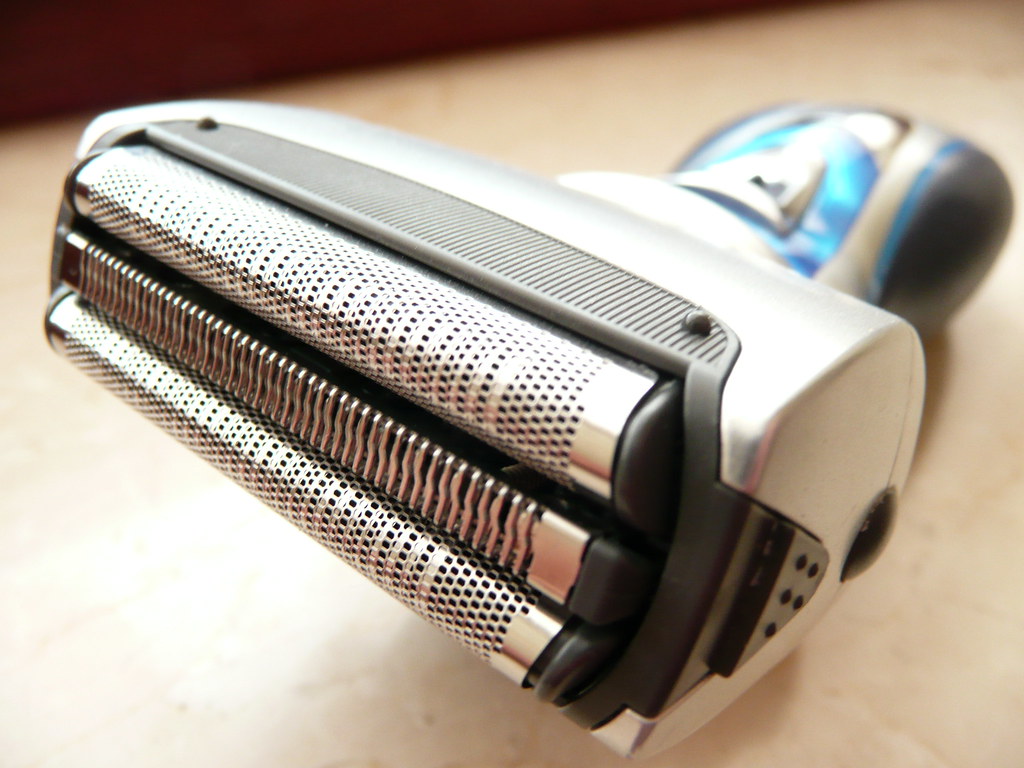
Most people clean their shaver and never touch the blades again until the shave goes bad. But a dry cutter is a slow cutter: the metal-on-metal friction heats up, drags on your scalp and wears the edges down months before their time. Learning how to oil your head shaver blades is the single cheapest habit that keeps a close shave close — it takes about fifteen seconds and costs a few cents of oil.
Why oiling matters more than cleaning
Inside the head, a cutter block slides back and forth against the foil (or under the rotary screens) thousands of times a minute. Rinsing washes away hair and skin, but it also strips the thin film of lubricant that lets those parts glide. Run it dry and three things happen fast: the edges abrade each other and dull, the motor works harder and runs hot, and that heat and vibration transfer straight to your skin as tug and irritation. A drop of oil restores the film, drops the running temperature, and can double how long a blade set stays sharp.
What oil to use (and what to never use)
Use a light, clear mineral oil. The small tube of oil that shipped with your shaver is exactly this; when it runs out, clipper oil or plain food-grade mineral oil (the kind sold for cutting boards) works just as well for a fraction of the price. Sewing-machine oil is the classic cheap substitute and is fine. What matters is that it is light and leaves no sticky residue.
Never use cooking oils — olive, coconut or vegetable oil turn gummy and rancid inside the head, gluing the cutter in place. Never use WD-40 or other spray “lubricants”: they are solvents, not lubricants, and they strip the protective coating and can seep into the motor. And skip thick oils like 3-in-1 or motor oil, which are too heavy and bog the cutter down.
How often to oil your head shaver blades
A good rule is a drop or two after every two or three shaves, and always right after a deep clean, because water and cleaning sprays wash the old film away. If you wet-shave with foam or gel, oil more often — soap residue is especially good at degreasing the blades. You will also feel when it is due: the shaver sounds louder and higher-pitched, and the head feels warmer against your hand. Those are your cues, not the calendar.
The step-by-step oiling routine
Do this with the shaver off and the head clean and fully dry — oil floats on water, so oiling a wet head just traps moisture against the metal.
First, pop or click the head off if your model allows, or simply tilt the shaver so the foil faces up. Put one small drop of oil at each end of the foil and one in the middle; for a rotary, put a drop on each of the circular screens. You want a thin film, not a puddle — more oil is not better and only flings off onto your scalp.
Next, reattach the head, hold the shaver over the sink or a paper towel, and run it for five to ten seconds. You will hear the pitch drop almost immediately as the oil works in. Finally, switch it off and dab the outside of the foil with a tissue to blot any excess so your first pass tomorrow is not oily. That is the whole routine.
Signs you have been skipping it
A shaver that is starving for oil tells you plainly: it gets loud, it heats up within a minute of use, it starts pulling instead of cutting, and the shave is suddenly patchy no matter how slowly you go. Many people read those symptoms as “the shaver is dying” and buy a new one, when a drop of oil and a proper clean would have fixed it. If you have gone a long time dry, clean the head thoroughly first, oil it, and run it a few extra seconds to let the film redistribute.
When oil cannot save the blades
Oiling slows wear, but it does not reverse it. If the edges are genuinely blunt — you have oiled and cleaned and it still tugs, or the foil has a shiny worn patch or a tear — it is time for a new cutter set, not more oil. Blades on a quality shaver typically last twelve to eighteen months with regular oiling. If yours wear out far faster than that, the shaver itself may be the weak link, and it is worth comparing your options against the best head shaver before you keep buying replacement foils for a machine that was never going to hold an edge.
Build the fifteen-second oiling habit into your clean-up and you will notice the difference the very next shave: quieter motor, cooler head, and a cut that glides instead of grabs.
Ready for the smoothest shave?
Our #1-ranked head shaver — the Exoshave 7D — has a magnetic click-off head that rinses clean and oils in seconds, and it's 50% off today.
See the #1 pick →