Shaving your head is already a full-body reach, and when you're dealing with a sore shoulder, arthritic hands, a healing injury, or reduced range of motion, the hardest part isn't the blade — it's holding your arm overhead long enough to finish. Learning to shave your head with limited arm mobility is mostly about changing your tools, your setup, and your pacing so your joints do far less work for the same smooth result. Here's how to make it comfortable and repeatable.
The easiest way to shave your head with limited arm mobility: let the tool work
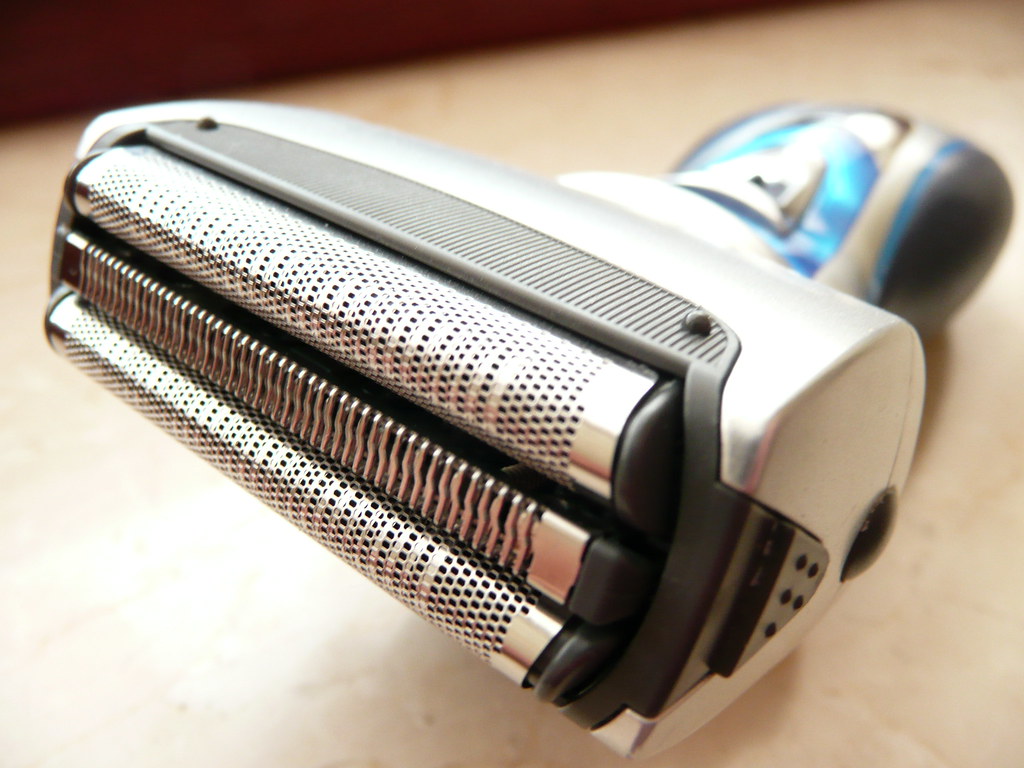
The single biggest change is picking a shaver that finishes in one pass with almost no pressure. A lightweight, all-in-one electric head shaver with a floating multi-blade head lets you glide instead of scrub, which means less time with your arm raised and no white-knuckle grip. Look for three things: low weight (so your shoulder tires slower), a wide grippy body or a strap you can slip your hand through, and a head that flexes to your scalp so you don't have to twist your wrist to keep contact. A traditional razor demands steady, precise pressure and repeated strokes — exactly the control that's hardest when your grip or shoulder is unreliable — so an electric shaver is the safer, easier choice here. If you want the shortlist we recommend, start with our roundup of the best electric head shaver.
Improve your grip before you improve your technique
A shaky or weak grip makes everything else worse. A few cheap fixes help a lot:
- Add girth to the handle. Slide a piece of foam pipe insulation or a foam grip tube over the body of the shaver so you can hold it in a relaxed palm instead of a tight pinch.
- Use a hand strap. A simple elastic or velcro strap around the back of your hand means you don't have to squeeze to keep hold of the shaver — useful if arthritis makes sustained gripping painful.
- Keep it charged and cordless. Fighting a cord adds effort and drag; a fully charged cordless shaver moves freely in any direction.
Set up the space so you can sit and rest
Standing at the sink with both arms up is the most tiring way to do this. Instead, sit on a stool or chair in front of the mirror so your core is supported and only your arms are working. Position an adjustable mirror at eye level, and add a second handheld or magnifying mirror so you can see the back of your head without craning your neck or holding your arm up to reposition. Good lighting from the front means you'll spot missed patches on the first look rather than going back over the same spot three times.
Work in zones and take breaks
You don't have to shave your whole head in one continuous motion. Break your scalp into zones — front, both sides, crown, and back — and lower your arm to rest between each one. Short, light strokes beat long sweeping ones: they need less shoulder rotation and give you more control. If one arm tires, switch hands for the easier zones; the sides and front are very forgiving. There's no rule that says the job must be finished in five minutes, and pacing it protects the joint you're trying to spare.
The back of the head: your smartest workaround
The crown and back are where overhead reach hurts most. A few strategies make them manageable: use a shaver with a rounded, pivoting head that keeps contact even at an awkward angle, rest your shaving elbow against a wall or high shelf for support, and lean your head forward to bring the back of your scalp down toward your hand instead of reaching up and over. If a zone is genuinely out of reach on a bad day, it's completely fine to leave the back for a second short session later, or to ask someone to run the shaver over that one area — it takes them fifteen seconds.
Time it for when your joints feel best
Warm, loose joints move more freely, so shave right after a warm shower or a few minutes of gentle shoulder rolls. Many people with arthritis find stiffness is worst first thing in the morning, so an evening shave may be far more comfortable. Prepping well — warm scalp, a thin layer of shave gel if you're wet-shaving with an electric — softens the hair so a single light pass clears it, which is the whole goal: the fewer passes you make, the less your arm has to do.
Limited mobility doesn't mean giving up a clean, smooth head. The right lightweight shaver, a better grip, a seated setup, and a zone-by-zone rhythm turn a tiring overhead chore into a few relaxed minutes. Adapt the routine to your good days and your harder ones, and you'll keep the look without the ache.
Ready for the smoothest shave?
Our #1-ranked head shaver — the Exoshave 7D — is lightweight and glides over your scalp in one pass with a magnetic floating head, so a clean, close shave feels effortless even when your grip or shoulder isn't at its best. It's 50% off today.
See the #1 pick →