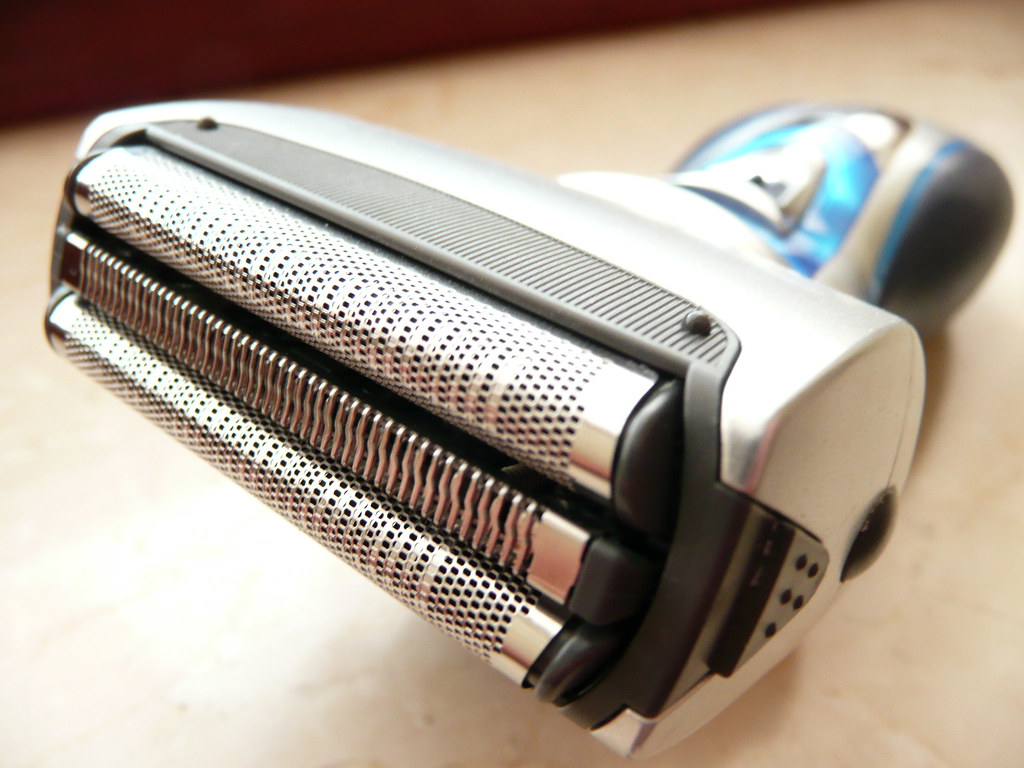
If you've ever tried to take a full head of dense hair down to bald in one go, you already know the problem: how to shave your head with thick hair is a completely different job from shaving a scalp that only grows fine stubble. Thick, coarse hair clogs the shaver every few strokes, tugs at the roots, and wears blades down fast. The good news is that none of that is about your technique being wrong — it's about the order you do things in. Get the sequence right and even the coarsest hair comes off smooth.
Why thick, coarse hair is harder to shave
Coarse hair has a wider shaft and more tensile strength than fine hair, so each strand resists being sheared instead of folding over. When too many of these strong strands hit the cutting head at once, the shaver bogs down, pulls hair before it cuts it, and packs the foil or blades solid. A clogged head can't sit flat against your scalp, so it misses spots and drags. Coarse hair also blunts edges quicker, which is why a shaver that felt sharp last month can suddenly feel like it's yanking. Almost every complaint about thick hair traces back to one of those two things: too much length going in, or a head that isn't clearing itself.
Step 1: Trim it down in stages first
Never take a full head of thick hair straight to a foil or rotary shaver — that's what causes the tugging. Start with clippers and no guard, or a long guard first if the hair is more than an inch, and knock the bulk down to a short, even stubble. If it's long, do it in two passes: a longer guard, then bare clippers. You want roughly 1–2 mm of length left before the shaver ever touches your head. This single step removes most of the load the shaver would otherwise choke on, and it's the difference between a five-minute shave and a frustrating twenty-minute one.
Step 2: Soften the hair before you shave
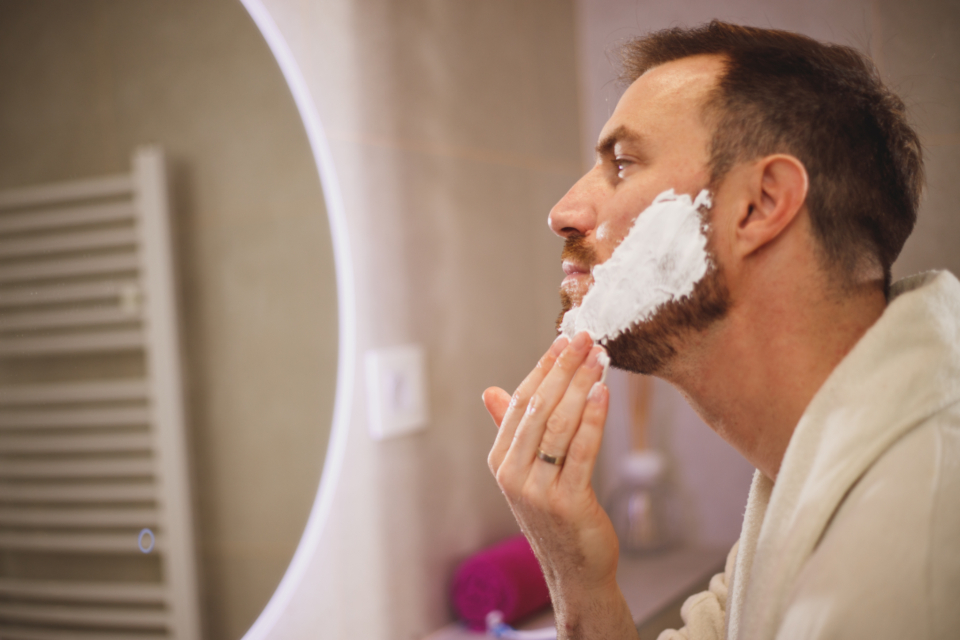
Coarse hair cuts far more easily when it's warm and hydrated, because water makes the shaft swell and go soft. Shave after a warm shower, or hold a hot, damp towel against your scalp for two to three minutes. If you wet-shave, lather a slick shaving cream and let it sit a full minute so it can penetrate the hair rather than just coating it. Softening buys you a closer cut with less pressure, which means less irritation on skin that coarse hair tends to leave bumpy.
Step 3: Shave in short strokes and let the head clear
Work in small sections with short, deliberate strokes instead of long dragging passes. Coarse hair fills a cutting head quickly, so tap the shaver out or rinse it every 20–30 seconds — a clogged head is the number-one reason a shave on thick hair feels rough. Go with the grain on the first pass. Coarse hair usually has a strong, obvious growth direction, and cutting along it first clears the bulk without dragging strands sideways into your skin. Let the weight of the shaver do the work; pressing harder just packs the head faster and irritates the scalp.
Step 4: Do a second pass across the grain for closeness
Once the first pass has cleared most of the length, reapply a little water or cream and go back over the same areas, this time across the grain (not directly against it). With the bulk already gone, the head stays clean and can get genuinely close without pulling. This two-pass approach — reduce first, refine second — is how you get a smooth finish on hair that would tear up your scalp if you tried to force it in one aggressive pass. For the closest, most even result on dense hair, a multi-blade floating head that flexes to your scalp clears far more per stroke than a single fixed foil, which is why it's worth using one of the best head shavers for men built for exactly this.
Keep your blades sharp — coarse hair eats them
Because thick hair dulls edges faster, clean your shaver after every single use: brush or rinse the hair out so it doesn't dry into a paste that grinds the blades. Replace foils and cutters on schedule (usually every 6–12 months) — a dull head is the fastest way to turn coarse hair into a tugging, bumpy mess. If your shaver rinses under water, do it warm to shift the oils coarse hair leaves behind.
Aftercare that matters more with coarse hair
Coarse hair is more prone to ingrown hairs and razor bumps because thick strands curl back into the skin. Finish with a cool rinse, a fragrance-free moisturizer, and an exfoliating scrub two or three times a week to keep follicles clear. If you get bumps, shaving slightly less close on problem areas usually solves it. Do this consistently and thick, coarse hair stops being a battle — it just becomes another smooth shave.
Ready for the smoothest shave?
Our #1-ranked head shaver — the Exoshave 7D — uses a magnetic floating head with seven blades that flex to the curves of your scalp, clearing thick, coarse hair in one pass instead of tugging and clogging. It's 50% off today.
See the #1 pick →