If your scalp ends up red, bumpy, or still stubbly no matter how carefully you work, the problem usually isn't your shaver — it's the direction you're moving it. Figuring out which direction to shave your head is the single biggest lever you have over closeness and comfort, and unlike your face, your head has hair that grows in several directions at once. Get the sequence right and you can have a smooth, irritation-free scalp in one short session.
First, Map Your Hair Grain
"Grain" just means the direction your hair naturally grows. On most heads it isn't uniform: hair on the top often grows forward or radiates out from the crown, the sides tend to grow downward, and the hair at the back of the neck frequently grows upward or swirls. The only way to know your own pattern is to check it after a day or two of growth.
Run your palm gently across your scalp in different directions. The way that feels smooth and offers little resistance is with the grain; the way that feels rough and catches slightly is against the grain. Do this over the top, both sides, and the back and neck — you'll likely find three or four different grain directions on a single head. That map is what tells you how to move the shaver in each zone.
With the Grain vs Against the Grain
Shaving with the grain means moving the blade in the same direction the hair grows. It's gentler, cuts the hair a little longer, and dramatically lowers your risk of irritation, razor burn, and ingrown hairs. Shaving against the grain means going the opposite way; it cuts closer because it lifts and severs the hair below the skin line, but it's also far more likely to cause bumps, redness, and ingrowns — especially for men with curly or coarse hair.
The takeaway isn't "always do one or the other." It's that the two directions do different jobs, and a good shave uses them in the right order.
Which Direction to Shave Your Head, Step by Step
For the closest comfortable result, work in passes rather than trying to remove everything in a single scrape:
Pass one — with the grain. Start with the hair softened (warm water helps) and make your first pass following the grain in every zone. This clears most of the length with almost no irritation and lets the shaver glide instead of dragging.
Pass two — across the grain. Reapply your shave cream or gel, then go perpendicular to the grain — sideways across the direction of growth. This closes the gap between "short" and "smooth" while staying gentler than a full against-the-grain pass.
Pass three — against the grain, only if needed. If a zone still feels rough, finish it against the grain with light pressure and plenty of lubrication. Skip this pass anywhere your skin is prone to bumps. Chasing baby-smoothness against the grain on an irritated scalp is how most people end up with the exact razor bumps they were trying to avoid.
Electric Shavers Change the Rules
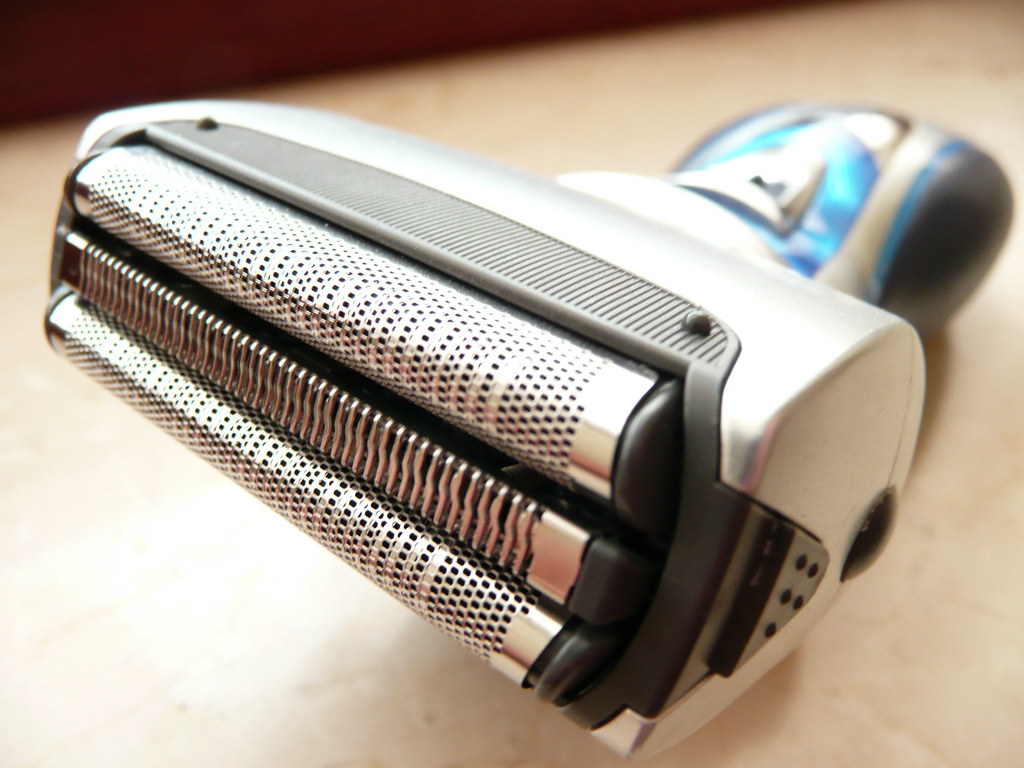
If you use a rotary or a multi-directional electric head shaver, direction matters a little less on the first pass — the heads are designed to catch hair growing multiple ways at once, which is a big part of why they're forgiving on a curved, multi-grain scalp. With a foil shaver you'll still get the closest result by moving against the grain in short strokes, but the floating heads on a quality best head shaver do a lot of that work for you by flexing to the contours of your head. The better the head conforms to your scalp, the less the exact stroke direction matters.
Common Direction Mistakes to Avoid
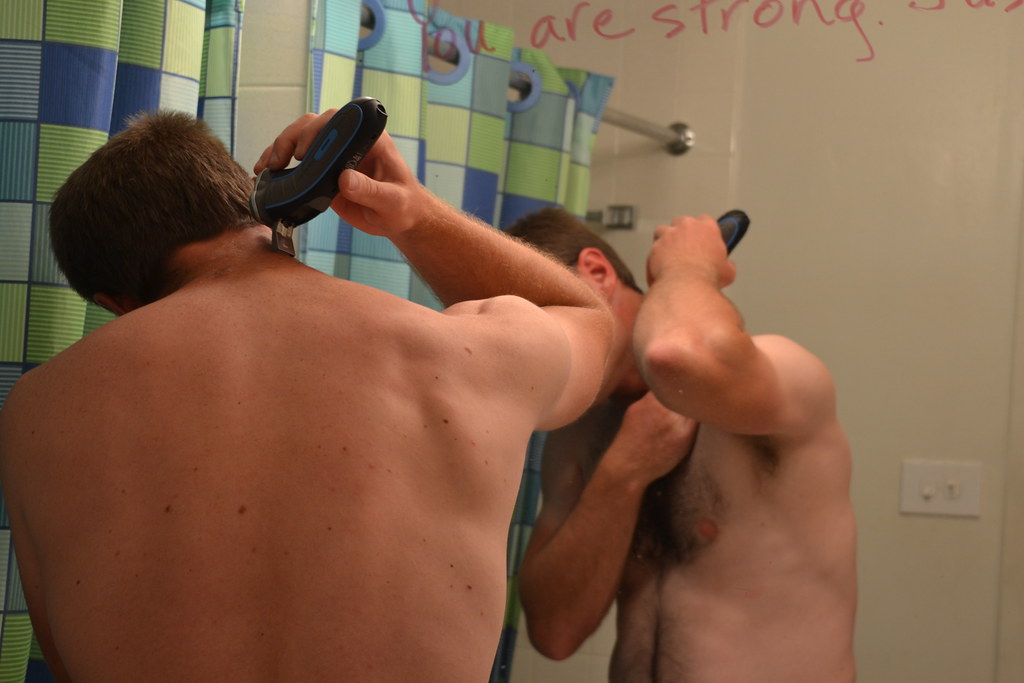
Three habits sabotage more head shaves than anything else. First, going straight against the grain on a dry, cold scalp — always soften and lubricate first. Second, pressing harder to "get it closer" instead of letting a sharp blade and a second pass do the work; pressure causes irritation, not closeness. Third, using one direction everywhere because it's easier — the back of your neck almost never grows the same way as the top of your head, so a single-direction shave guarantees missed patches and unevenness.
Map your grain once, shave in passes, and reserve against-the-grain for the spots that truly need it. Do that consistently and "which direction should I shave?" stops being a guessing game — it becomes muscle memory.
Ready for the smoothest shave?
Our #1-ranked head shaver — the Exoshave 7D — uses a magnetic floating head with seven blades that flex to the curves of your scalp, so it cuts cleanly no matter which way your hair grows. It's 50% off today.
See the #1 pick →